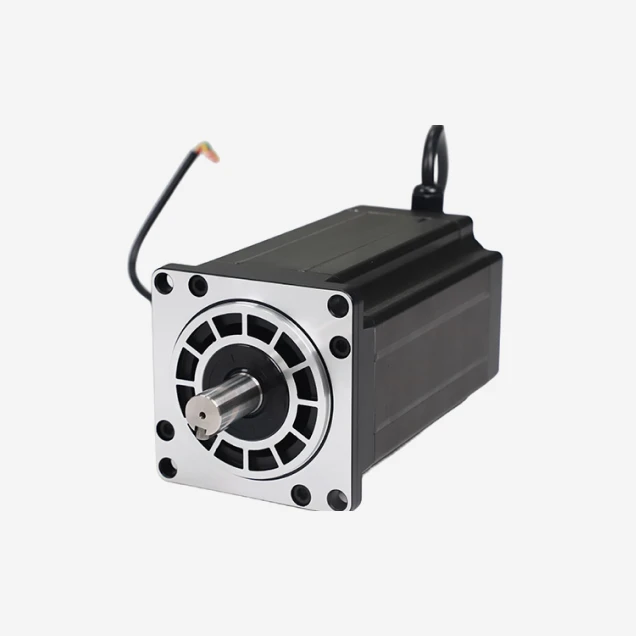
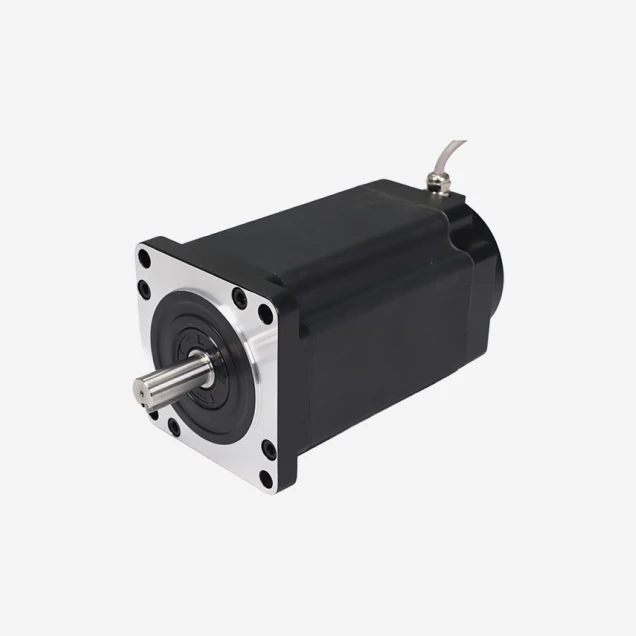
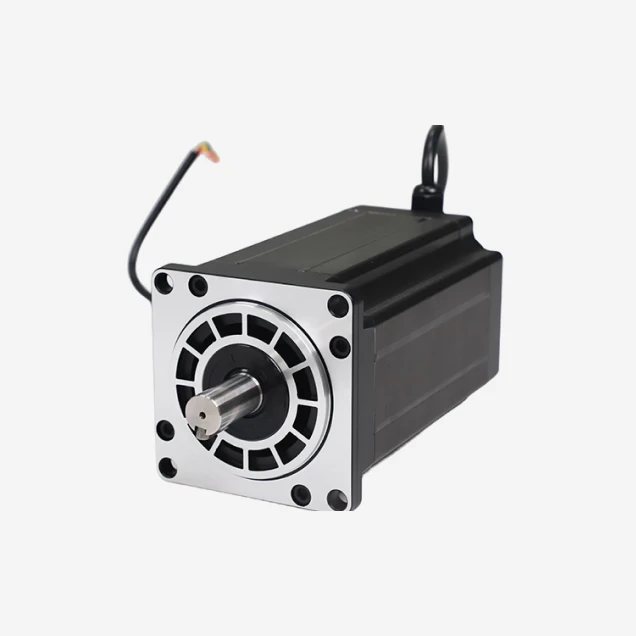
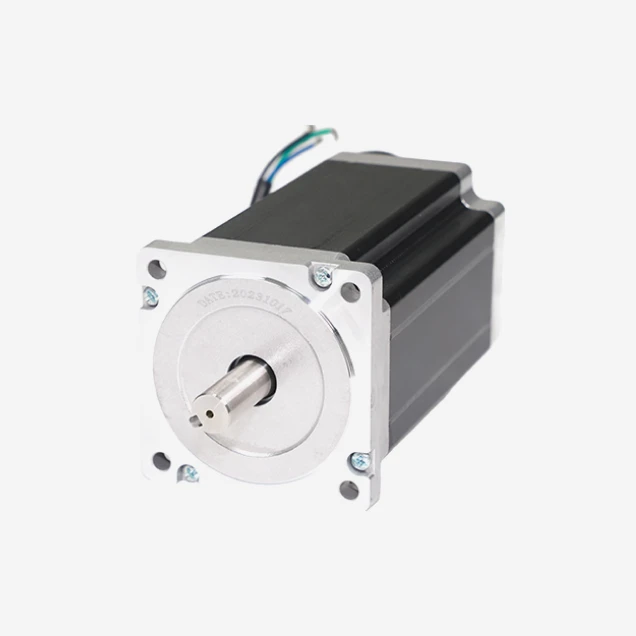
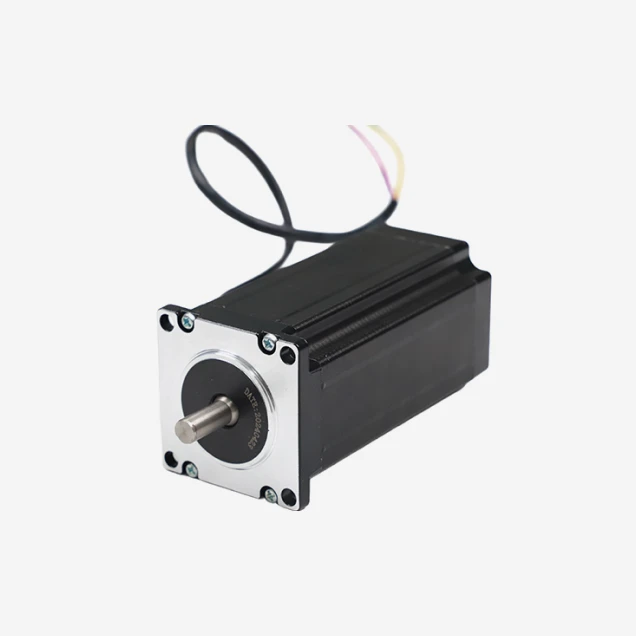
3-Phase NEMA 42 Stepper Motor: Smooth, High-Torque Motion in a 110mm Frame
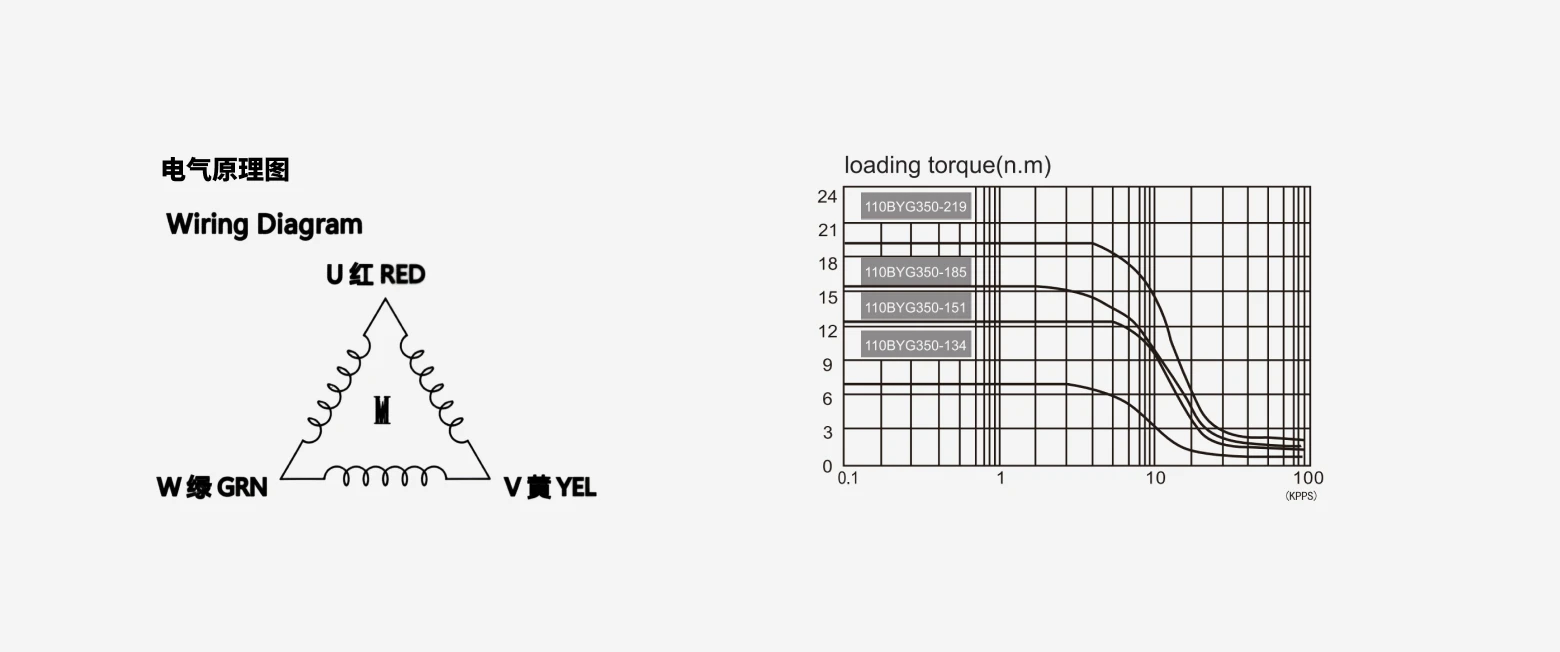
The 3-phase NEMA 42 stepper motor is a 110mm hybrid stepper built with three windings — one of the largest stepper frames made. A NEMA 42 3 phase stepper motor trades a more common driver for smoother, faster motion on a heavy axis. The extra phase smooths the current waveform, cutting vibration and resonance on a frame where those problems are otherwise hard to manage, and it holds torque to higher speeds. It runs at a 1.2° step angle (300 steps per revolution) and needs a 3-phase stepper driver. Holding torque runs from about 12 N·m to 20 N·m depending on body length.
Key Specifications at a Glance
| Parameter | Specification |
|---|
| Frame Size | 110 × 110 mm |
| Step Angle | 1.2° (300 steps/rev) |
| Phase | 3-phase |
| Holding Torque | 12–20 N·m |
| Rated Current | 5.5–7.0 A/phase |
| Body Length | 115–201 mm (varies by model) |
| Drive | 3-phase driver (3 half-bridges) |
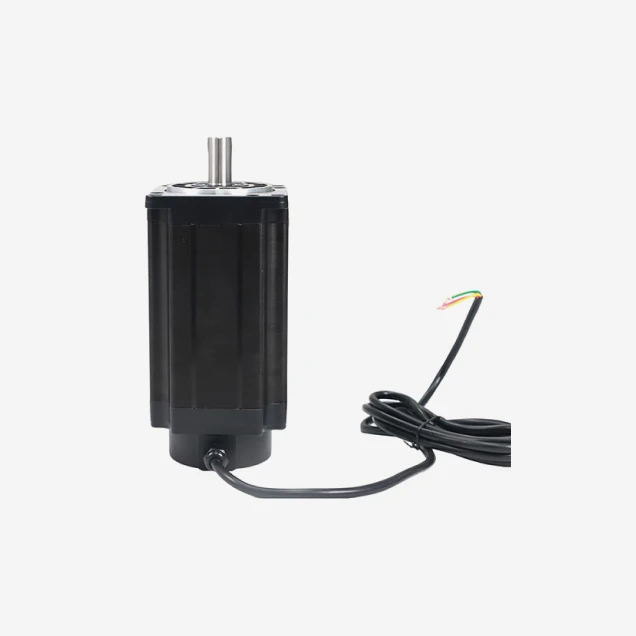
| Lead Wires | 3-wire
|
Why Choose 3-Phase
On a frame this large, the smoothness of a 3-phase motor is its main advantage over a 2-phase one. The benefit is motion quality, not raw torque:
- Lower vibration — three phases give a smoother rotating field and less torque ripple, which matters a lot on a heavy moving mass.
- Less resonance — the mid-speed resonance that troubles large 2-phase motors is much weaker.
- Better high-speed torque — usable torque holds to higher speeds.
- Smoother running — steadier motion on big axes where vibration carries into the structure.
The trade-off is the driver: a 3-phase motor needs a dedicated, high-current 3-phase stepper driver, which is less common and costs more.
Typical Applications
The 3-phase NEMA 42 is for the heaviest stepper-driven axes where motion quality counts:
- Large CNC routers and mills — big-format gantry and table drive.
- Plasma and waterjet cutters — heavy, fast gantry motion.
- Industrial automation — large conveyors, lifts, and indexing systems.
- Press and forming machines — high-torque feed needing steady motion.
- Heavy material handling — large winders, reels, and feeders.
With a gearbox the same frame drives a very-high-torque, low-speed axis; a dual-shaft version adds a rear shaft for an encoder. Mounting brackets are available for machine integration.
3-Phase vs 2-Phase NEMA 42: Which One Do You Need?
Both are 110mm frames. The choice is motion quality versus cost:
| 3-Phase NEMA 42 | 2-Phase NEMA 42 |
|---|
| Step Angle | 1.2° | 1.8° |
| Vibration | Lower | Moderate |
| High-speed torque | Better | Good |
| Driver | 3-phase (less common) | 2-phase (common, cheaper) |
| Cost | Higher | Lower |
Pick 3-phase when smooth, low-vibration, high-speed motion matters on a heavy axis. Pick the 2-phase NEMA 42 stepper motor when cost and driver availability lead. If you need still more torque, the NEMA 51 3-phase is the next size up.
Customization Options
Cymotorix 3-phase NEMA 42 stepper motors can be customized for OEM integration. As a 3-phase NEMA 42 stepper motor manufacturer and supplier, we produce them to your specification. Common modifications include:
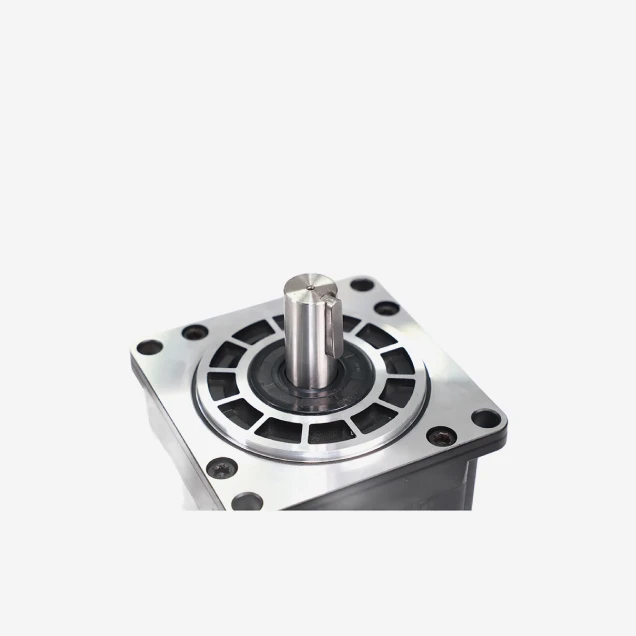
- Shaft diameter and length adjustment (standard shaft is 19mm with keyway)
- D-cut, flat, or keyed shaft for direct coupling
- Dual-shaft output for a rear encoder or second load
- Custom lead wire length and connector type
- Winding parameters modified to match your driver voltage and current
- Rear-shaft extension for encoder mounting
- Mounting bracket for machine integration
- Planetary or worm gearbox integration for higher output torque at low speed
How to Drive a 3-Phase NEMA 42 Stepper Motor
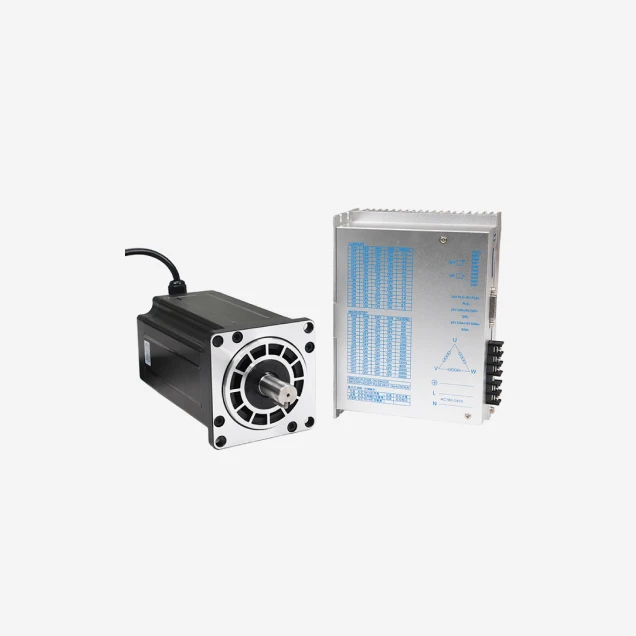
A 3-phase NEMA 42 runs only on a high-current 3-phase stepper driver, which switches the three windings through three half-bridges. It will not run on a standard 2-phase driver. Rated current is around 5.5 to 7.0 A per phase, so the driver must be sized accordingly. We supply a matched 3-phase driver set up for the motor if you want the pair tested together.
Recommended supply voltage is 60–110VDC. This large frame has high winding inductance, so a high bus voltage is essential to push current in fast and hold torque at speed. Set the driver's current limit to the motor's rated current so the windings don't overheat.